The Process of Anaerobic Digestion
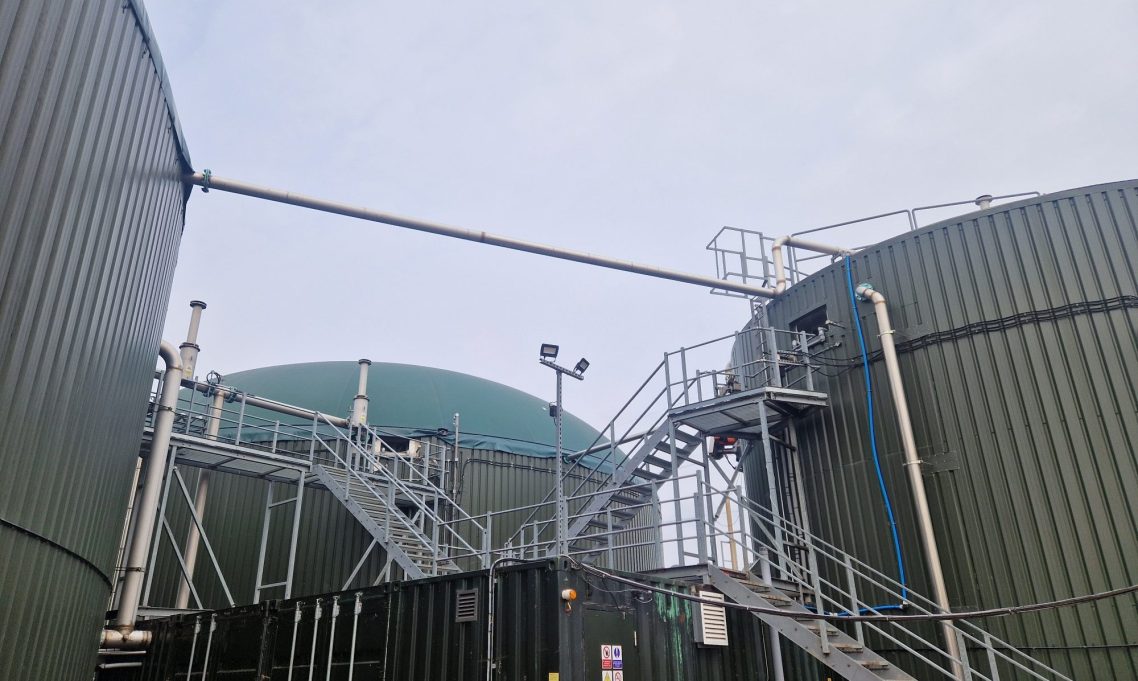
An anaerobic digester is a sophisticated system designed to break down organic material in the absence of oxygen.
Anaerobic digestion is a natural process that occurs in animals. By replicating this process in a controlled environment, anaerobic digesters can efficiently convert organic materials into useful by-products.
The primary output of anaerobic digestion is biogas,. The biogas is then used for the production of electricity.
In addition to biogas, anaerobic digestion produces digestate, a nutrient-rich substance that is used as a high quality fertiliser.
Anaerobic digesters play a crucial role in promoting sustainability by reducing waste, lowering greenhouse gas emissions, and supporting renewable energy production
Feeding
The feedstocks are loaded into the feed hopper, where they are mixed with liquid from the digester storage tank. This mixture is then fed into the primary 'turbo' tank. Each feed is automatically calculated and timed to ensure a consistent supply to the system, maintaining the optimal health of the digester tanks
Biological Process
Anaerobic digestion is a biological process that occurs in several stages, each facilitated by different groups of microorganisms. Here are the main stages:
Hydrolysis: Large organic molecules are broken down into smaller molecules like sugars and amino acids.
Acidogenesis: These smaller molecules are further broken down into volatile fatty acids, carbon dioxide, and hydrogen.
Acetogenesis: The volatile fatty acids are converted into acetic acid, carbon dioxide, and hydrogen.
Methanogenesis: Finally, methanogenic archaea convert the acetic acid and hydrogen into methane and carbon dioxide
Renewable Energy
The biogas produced in the biological process is fed into a Combined Heat and Power (CHP) engine where it is burned, converting chemical energy into mechanical energy.
The mechanical energy from the engine turns a generator, producing electricity. This electricity is used to power the site and is fed into the grid
Digestate
The fibrous material that is created as a result of the digestion process is called digestate. It consists of both liquid and solid fractions that are rich in nutrients like nitrogen, phosphorus, and potassium, making it an excellent fertiliser.
TREL apply this digestate to the land producing the feedstocks to ensure a high yield for the supplier and completes the sustainable cycle of the anaerobic digestion process